

You feel the heat rising in your chest before you even realize why you’re angry. Maybe it’s a slow driver, a passive-aggressive email, or a project that’s falling behind. When you search for Stoic Quotes on Controlling Anger and Impatience, you aren’t looking for abstract academic theories. You want immediate, practical relief from the friction of daily life. You want to stop letting external events hijack your inner peace.
Stoicism isn’t about suppressing your emotions or wearing an unfeeling mask; it’s about dissecting your impulses before they turn into destructive actions. It’s about taking back your power. Let’s explore how the ancient masters reclaimed their sanity, and how you can do the same today.
Key Takeaways
- Anger is a Choice: External events don’t make you angry; your judgment of those events does.
- The Power of Delay: Giving yourself even ten seconds before reacting breaks the automatic impulse loop.
- Impatience is an Illusion: Trying to rush reality only punishes yourself, not the clock.
- Control the Controllables: Focus entirely on your response, letting go of things outside your sphere of influence.
The Anatomy of Anger (Short & Powerful)
When irritation strikes, you need immediate mental circuit breakers. These short, sharp Stoic Quotes on Controlling Anger and Impatience reveal that anger is never a sign of strength—it’s a temporary loss of sanity. Reclaiming your composure begins with recognizing that your temper is a vulnerability, not a weapon.
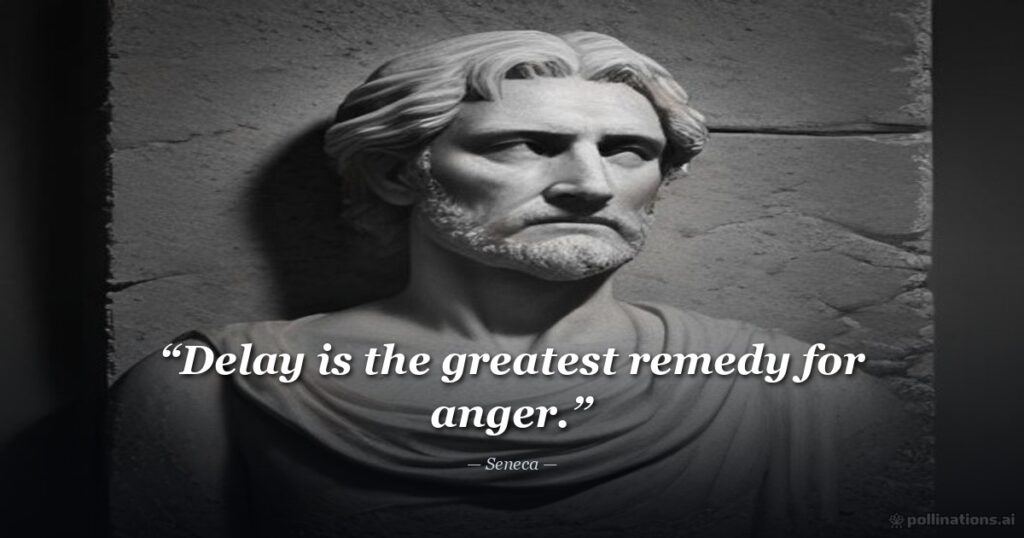
“Delay is the greatest remedy for anger.”
— Seneca
The Deeper Meaning: Seneca reminds us that anger relies on immediate momentum. By inserting a deliberate pause between the trigger and your response, you allow your rational mind to catch up with your animal instincts.
How to Apply It: The next time you feel an urge to snap, commit to taking three slow, deep breaths before speaking a single word.
“How much more grievous are the consequences of anger than the causes of it.”
— Marcus Aurelius
The Deeper Meaning: The damage we cause in a few seconds of rage—broken relationships, ruined reputations, or shattered trust—almost always outweighs the minor inconvenience that triggered our anger in the first place.
How to Apply It: Ask yourself: “Will the fallout of my reaction be worse than the problem itself?” Usually, the answer is a resounding yes.
- “Anger, if not restrained, is frequently more hurtful to us than the injury that provokes it.” — Seneca
- “To be angry is to revenge the faults of others upon ourselves.” — Seneca
- “Anger is like a ruin, which breaks itself upon what it falls.” — Seneca
- “Keep this thought handy when you feel a fit of temper: anger is not manly.” — Marcus Aurelius
- “An angry man is always full of poison.” — Seneca
- “No plague has cost the human race more than anger.” — Seneca
- “The best fighter is not a person who is angry.” — Marcus Aurelius
- “Anger is a short madness.” — Horace
- “A man is as wretched as he has convinced himself he is.” — Seneca
- “Remember that to change your mind and follow him who sets you right is to be free.” — Marcus Aurelius
- “Anger is an acid that can do more harm to the vessel in which it is stored.” — Seneca
- “To be calm is the highest achievement of the self.” — Zen/Stoic proverb
- “He who angers you conquers you.” — Seneca
The Art of the Pause (Stoic & Philosophical)
Impatience is simply a refusal to accept reality as it unfolds. The Stoics understood that demanding the world move at our preferred speed is a recipe for constant misery. By training your mind to accept the present moment, you eliminate the friction of waiting.
“People are not disturbed by things, but by the views they take of things.”
— Epictetus
The Deeper Meaning: The traffic jam, the late flight, or the broken tool is not inherently frustrating. The frustration lives entirely in your expectation that things should be going differently.
How to Apply It: When delayed, say to yourself: “The situation is neutral. My frustration is my own creation.”
“We suffer more often in imagination than in reality.”
— Seneca
The Deeper Meaning: Impatience often stems from catastrophizing the future. We worry about lost time, missed opportunities, and worst-case scenarios rather than focusing on the present moment.
How to Apply It: Ground yourself in the present physical space by identifying five things you can see and three things you can hear.
- “Do not seek for things to happen the way you want them to; rather, wish that what happens happens the way it happens.” — Epictetus
- “He who is brave is free.” — Seneca
- “Time discovers truth.” — Seneca
- “Nothing is so wretched or foolish as to anticipate misfortunes.” — Seneca
- “Two words should be committed to memory and obeyed: persist and resist.” — Epictetus
- “No person has the power to have everything they want, but it is in their power not to want what they don’t have.” — Seneca
- “Suffer not your thoughts to become chaotic.” — Marcus Aurelius
- “First say to yourself what you would be; and then do what you have to do.” — Epictetus
- “We must undergo a hard winter training and not rush into things for which we are not prepared.” — Epictetus
- “Let not your mind run ahead of the present.” — Marcus Aurelius
- “He who fears death will never do anything worthy of a man who is alive.” — Seneca
- “Quiet minds cannot be perplexed or frightened.” — Seneca
- “The mind that is anxious about future events is miserable.” — Seneca

Turning Obstacles into Calm (Adversity & Resilience)
Adversity tests our emotional foundations. When things go wrong, applying Stoic Quotes on Controlling Anger and Impatience to moments of crisis helps us see obstacles not as personal insults, but as opportunities to practice patience and grow stronger.
“The impediment to action advances action. What stands in the way becomes the way.”
— Marcus Aurelius
The Deeper Meaning: Every frustrating delay or annoying obstacle provides the exact raw material you need to build character. The challenge itself is your training ground.
How to Apply It: Reframe every setback today as a customized pop-quiz designed to test your resilience.
“It’s not what happens to you, but how you react to it that matters.”
— Epictetus
The Deeper Meaning: You have zero control over external events, but complete ownership over your internal response. This boundary is the ultimate source of human freedom.
How to Apply It: Draw a mental line between the external event (the “what”) and your internal response (the “how”), focusing only on the latter.
- “Fire is the test of gold; adversity, of strong men.” — Seneca
- “Difficulty shows what men are.” — Epictetus
- “Accept the things to which fate binds you, and love the people with whom fate brings you together.” — Marcus Aurelius
- “The art of living is more like wrestling than dancing.” — Marcus Aurelius
- “Misfortune is virtue’s opportunity.” — Seneca
- “I am always content with that which happens, for I think that what God chooses is better.” — Epictetus
- “Receive without pride, let go without attachment.” — Marcus Aurelius
- “A gem cannot be polished without friction, nor a man perfected without trials.” — Seneca
- “It is the edge of the blade that cuts, but the hand that guides it.” — Epictetus
- “To bear trials with a calm mind robs misfortune of its strength.” — Seneca
- “If you are pained by any external thing, it is not this thing that disturbs you, but your own judgment.” — Marcus Aurelius
- “What is quite unendurable is for a man to be unable to bear himself.” — Seneca
- “The soul becomes dyed with the color of its thoughts.” — Marcus Aurelius
The Illusions of Urgency (Psychological & Modern)
Our hyper-connected lives trick us into believing that everything is an emergency. The Stoics recognized this illusion centuries ago, teaching us how to strip away the false urgency that breeds impatience and anxiety.
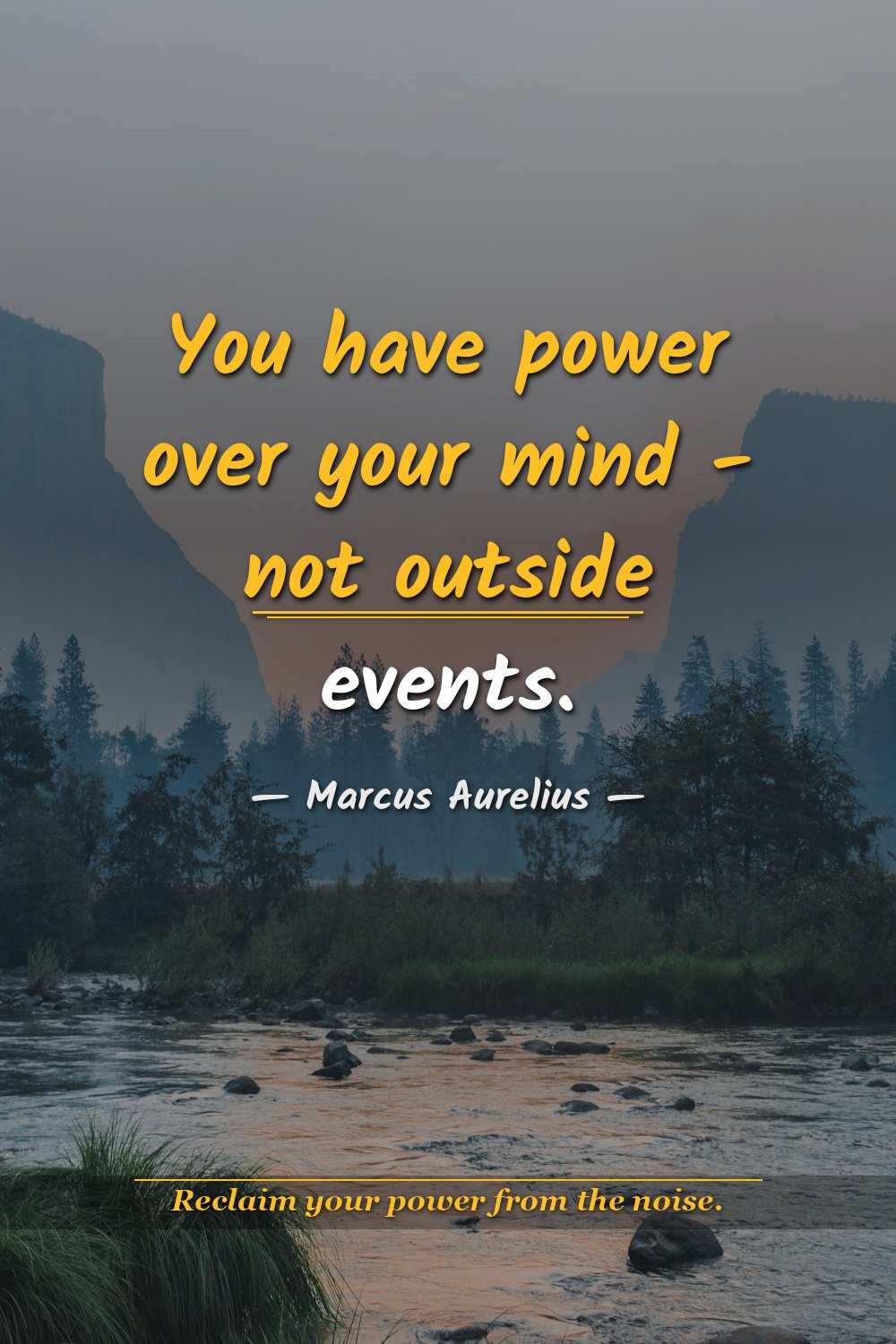
“You have power over your mind – not outside events. Realize this, and you will find strength.”
— Marcus Aurelius
The Deeper Meaning: Impatience is born from trying to control things outside our domain, like time, traffic, or other people. True strength lies in reclaiming control over your own focus.
How to Apply It: When you feel rushed, ask yourself: “Am I actually late, or am I just letting an arbitrary deadline dictate my peace?”
“Wild beasts run from the dangers they see; once they have escaped, they are free from anxiety. But we are tormented by both what is past and what is to come.”
— Seneca
The Deeper Meaning: Humans carry their stressors around like heavy baggage, relitigating old arguments and dreading future deadlines. This constant time-travel ruins our ability to remain calm in the present.
How to Apply It: Practice anchoring yourself in the current room. Tell yourself: “Right here, right now, I am safe and okay.”
- “Nothing is more precious than time, yet nothing is less valued.” — Seneca
- “We are tight-fisted with our property, but when it comes to wasting time, we are most wasteful.” — Seneca
- “Most of what we say and do is not essential. If you can eliminate it, you will have more time.” — Marcus Aurelius
- “It is not that we have a short time to live, but that we waste a lot of it.” — Seneca
- “The greatest obstacle to living is expectancy, which hangs upon tomorrow and loses today.” — Seneca
- “Stop letting yourself be distracted. Squeeze the time you have left.” — Marcus Aurelius
- “Only the educated are free.” — Epictetus
- “No man is free who is not master of himself.” — Epictetus
- “Make the best use of what is in your power, and take the rest as it happens.” — Epictetus
- “A person’s worth is measured by the worth of what he values.” — Marcus Aurelius
- “He who is everywhere is nowhere.” — Seneca
- “If you wish to be quiet, do not do many things.” — Democritus
- “The value of attentiveness varies in proportion to its object.” — Marcus Aurelius
Master of Your Own Mind (Mindset & Affirmation)
Real self-mastery is an active, daily practice. By integrating these Stoic Quotes on Controlling Anger and Impatience into your mindset, you build an unbreakable inner citadel that remains untouched by external chaos.
“He is most powerful who has power over himself.”
— Seneca
The Deeper Meaning: True power isn’t about controlling others or dominating your environment. It’s the rare ability to command your own emotions, impulses, and reactions under pressure.
How to Apply It: When provoked, treat your self-control as a silent victory. Smiling and walking away is the ultimate display of dominance.
“The best revenge is to be unlike him who performed the injury.”
— Marcus Aurelius
The Deeper Meaning: Meeting anger with anger only multiplies the negativity in the world. By responding with calm dignity, you refuse to let the other person’s bad behavior dictate your character.
How to Apply It: When someone treats you rudely, consciously decide to respond with polite, professional boundary-setting instead of returning their attitude.
- “The happiness of your life depends upon the quality of your thoughts.” — Marcus Aurelius
- “If anyone can refute me—show me I’m making a mistake—I’ll gladly change. It’s the truth I’m after.” — Marcus Aurelius
- “Control your passions lest they take vengeance on you.” — Epictetus
- “No man is hurt but by himself.” — Diogenes
- “Freedom is the only worthy goal in life. It is won by disregarding things beyond our control.” — Epictetus
- “Think of yourself as dead. You have lived your life. Now take what’s left and live it properly.” — Marcus Aurelius
- “It is a rough road that leads to the heights of greatness.” — Seneca
- “If you lose your temper, you have lost the battle.” — Epictetus
- “A wise man is content with his lot, whatever it may be, without wishing for what he has not.” — Seneca
- “Very little is needed to make a happy life; it is all within yourself.” — Marcus Aurelius
- “No one can rob you of your free will.” — Epictetus
- “A consciousness of wrongdoing is the first step to salvation.” — Seneca
- “Begin each day by telling yourself: Today I shall be meeting with interference, ingratitude, insolence, disloyalty, ill-will, and selfishness.” — Marcus Aurelius
How to Apply Stoic Quotes on Controlling Anger and Impatience in Daily Life
Reading philosophy is easy, but practicing it when someone cuts you off in traffic is where the real work begins. To bridge the gap between ancient wisdom and daily frustrations, implement these three practical frameworks:
- The Morning Anchor Ritual: Before checking your phone, spend two minutes anticipating potential friction. Remind yourself that you will encounter difficult people and delays today. This mental rehearsal strips away the shock value of daily frustrations, ensuring your mind is already prepared.
- The Pause-Reflect Technique: When an irritation triggers your fight-or-flight response, physically step back if possible. Take a deep breath and name the emotion: “This is anger.” By naming it, you move the experience from the emotional amygdala to the rational prefrontal cortex, robbing the emotion of its direct power over your muscles.
- The Evening Reset: Before bed, review your day without judgment. Where did you lose your cool? What triggered your impatience? Write down how you will handle that exact trigger next time. This daily feedback loop builds long-term emotional resilience.
Frequently Asked Questions
How did the Stoics view anger?
The Stoics viewed anger as a temporary madness and a fundamental error in judgment. They believed that anger is never useful or rational, but is instead a destructive passion that arises when we fail to accept reality or try to control things outside our influence.
Is suppressing anger a healthy Stoic practice?
No, Stoicism is not about suppressing or bottling up your emotions. Instead, the core philosophy behind Stoic Quotes on Controlling Anger and Impatience is to dissect and reframe your thoughts so that anger never develops in the first place. It is about emotional transformation, not suppression.
How can I practice Stoicism when I feel impatient?
When impatience strikes, immediately remind yourself of the dichotomy of control. You cannot control the speed of the line, the traffic, or other people, but you can control your response. By studying Stoic Quotes on Controlling Anger and Impatience, you learn to use these moments as training exercises for your mind.
Closing Reflection
Cultivating a calm mind is a lifelong practice, not an overnight achievement. By revisiting these Stoic Quotes on Controlling Anger and Impatience whenever your peace is threatened, you slowly rewrite your default reactions. Be patient with your progress—even the Roman Emperor Marcus Aurelius struggled with his temper. Save this page, bookmark your favorite quotes, and share them with someone who needs a moment of quiet strength today.